Why does website speed matter for small businesses?
A fast website ensures that potential customers stay on your page rather than bouncing back to Google to find a competitor. When your site loads in under three seconds, you provide a professional experience that builds trust and increases the likelihood of a visitor becoming a lead.
The Hidden Cost of a Slow Website
Most business owners focus on the colors and fonts of their site, but the “under the hood” performance is what actually drives revenue. If your website takes more than a few seconds to load, this can become an annoyance to your visitors and you are actively pushing them away.

Research shows that even a one-second delay can cause a significant drop in conversions. For a local service provider, this could mean the difference between booking five new jobs a week or just one. In a competitive market, speed is often the deciding factor in who gets the phone call.
A single second in page load time can reduce conversion rates by 7%. For a local business, speed isn’t a luxury: it’s a sales strategy.
How do I check my website speed for free?
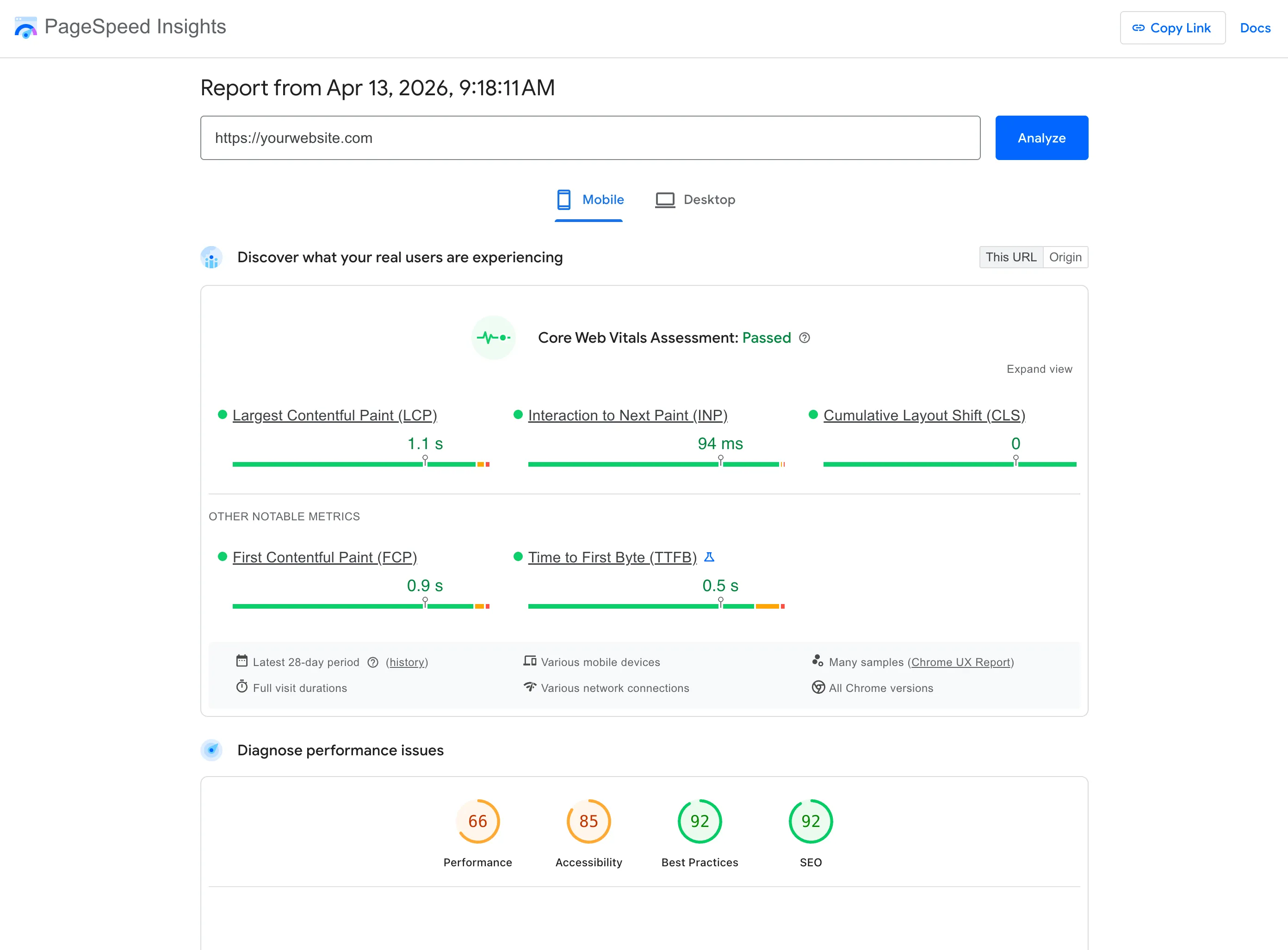
You can use free, industry-standard tools like Google PageSpeed Insights or GTmetrix to get a detailed report on your site’s performance. These tools provide a score and a list of specific technical issues that are slowing down your user experience.
Running Your First Audit
- Visit Google PageSpeed Insights: This is the most important tool because it shows you exactly how Google views your site.
- Enter your URL: Check both the “Mobile” and “Desktop” tabs. Mobile is where most local searches happen, so pay close attention to that score.
- Look for the “Red” areas: These are the critical issues. Usually, they involve large images or old code that takes too long to process.
What are the most common causes of slow websites?
The most frequent culprits are oversized images, a high number of unnecessary plugins, and low-quality “budget” hosting plans. While these choices save money upfront, they often lead to poor performance that hurts your bottom line in the long run.
- Large Image Files: High-resolution photos from your phone or a professional camera are often way too big for the web.
- Too Many Plugins: On platforms like WordPress or WooCommerce, each plugin adds a layer of code that your server needs to process and your visitor’s browser has to read.
- Lack of Caching: Without a caching system, your website has to build every page from scratch every time someone visits.
When should I hire a professional for speed optimization?
While you can fix simple issues like image sizes yourself, a professional is needed when your site requires advanced technical work like server-level caching, code minification, or API optimizations. An agency uses tools to analyze thousands of data points and implement deep technical fixes that go beyond basic DIY plugins.
Professional optimization ensures your site stays fast even as you add more content. Instead of putting a “band-aid” on the problem; we rebuild the foundation so your site remains a lead-generating machine. See how we achieved this for Country Carpet, a local New Hampshire cleaning company.
Good questions
Frequently Asked Questions
Will a faster website really get me more customers?
Yes. Faster sites have lower bounce rates, meaning people stay longer and are more likely to fill out your contact form. Google also ranks faster sites higher in search results.
I have a high speed score, but my site still feels slow. Why?
Scores aren't everything. Your site might have a fast first paint but take a long time to become interactive. A professional audit looks at the Time to Interactive to ensure a smooth user experience.
Is speed optimization a one-time thing?
While a major overhaul provides a massive boost, performance can degrade as you add new images or features. Periodic check-ins ensure your site remains optimized.